Playful Cartoon Cat in a Box
A Designer’s First Look: Charm Without Clutter
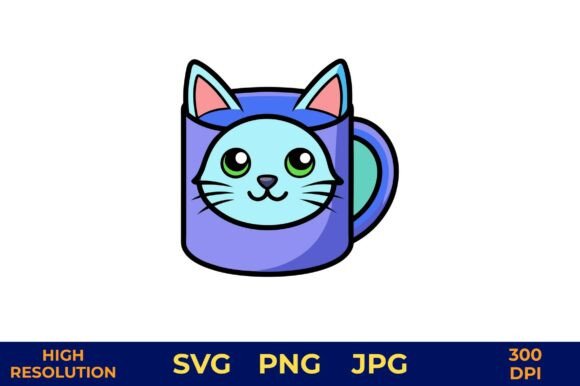
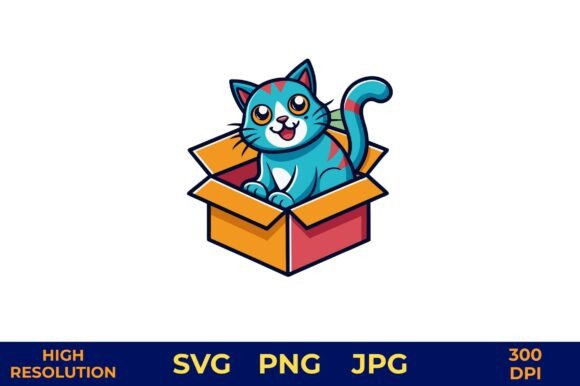
When I opened Playful Cartoon Cat in a Box, my first thought wasn’t “cute”—it was “usable.” That blue cat, with oversized eyes and a slightly tilted head peeking from a crinkled cardboard box, lands right in that sweet spot between whimsy and clarity. The illustration isn’t overly detailed—no tiny whisker lines or shading gradients—and that’s its strength. As an embroidery designer, I immediately saw how this would translate to stitch: clean outer edges, generous negative space around the box, and bold, readable shapes. It doesn’t try to be photorealistic. It leans into cartoon logic—and that makes it far more forgiving on fabric.
Where This Design Earns Its Keep
I tested Playful Cartoon Cat in a Box as the centerpiece for a custom embroidered tote bag—linen-cotton blend, medium weight, natural tone. It stitched cleanly at 4.5” wide, with no distortion in the box corners or cat’s ears. The simplicity of the design meant fewer thread breaks, less re-hooping, and faster turnaround—critical when juggling client orders or craft fair prep. It also worked beautifully on a soft cotton baby onesie (with lightweight tear-away stabilizer), where delicate details often blur or snag. Parents responded instantly to the expression—playful but not saccharine, friendly but not generic.
For Etsy sellers and small shop owners, this is low-risk, high-recognition appeal. It reads well on digital mockups—whether you’re showing it on a sweatshirt front, a tea towel corner, or an embroidered patch sewn onto a denim jacket. Because the SVG, PNG, and JPG files all include transparent backgrounds, swapping it into layered mockup templates takes seconds. No clipping masks. No background cleanup. Just drop, resize, and preview.
Real-World Embroidery Considerations
That said, Playful Cartoon Cat in a Box isn’t magic—it’s a tool. And tools need context.
- Small hoop sizes? It scales down well to ~3”, but avoid going under 2.5”. The box flaps and cat’s eye highlights start to lose definition below that.
- Textured or stretchy fabric? Use cutaway stabilizer on knits or terry cloth. The box outline relies on crisp satin stitch edges—those can waver on unstable surfaces.
- Dark fabric? Test thread contrast first. A light blue cat on navy works if you use bright white or pale yellow for the eyes—but avoid pastel threads that mute the expression.
- Curved surfaces (caps, curved aprons)? The flat, front-facing layout handles gentle curves fine, but avoid wrapping it over deep crowns or tight seams—the box perspective flattens naturally, so it won’t look “off,” but tiny details like the cat’s paw may compress.
What It Adds to Your Finished Product
This isn’t just decoration—it elevates perception. On a handmade pillow cover, Playful Cartoon Cat in a Box reads as intentional, curated, and confident—not clip-art casual. Customers notice that difference. It signals care in selection, not just speed in execution. For boutique branding or nursery decor, it adds warmth without clutter. For holiday embroidery or personalized gifts, it’s nostalgic but fresh—think birthday onesies, teacher appreciation totes, or baby shower kitchen towels.
It also supports brand consistency. Because the illustration has clear visual hierarchy—the cat draws the eye, the box grounds it—you can pair it with simple typography (a single name, a short phrase) without visual competition. That matters when building repeatable product lines for your craft business.
Design Notes Every Embroiderer Should Check
- Always test on scrap fabric first—especially if stitching on textured weaves or blends. What looks sharp on screen may soften on linen or fleece.
- Review stitch density before sending to machine. Even simple designs can run dense in fill areas (like the box base). If your machine struggles with heavy fills, consider simplifying or adjusting underlay.
- Confirm hoop size compatibility. While the design itself is scalable, your machine’s maximum hoop area determines how large you can go without splitting the file.
- Inspect small details at actual stitch size. Zoom in on the cat’s pupils and box creases in your embroidery software—they should hold shape, not dissolve into speckles.
- Test black-and-white mockups. Does the design retain personality without color? With Playful Cartoon Cat in a Box, it does—proof of strong silhouette and proportion.
- Compare light vs. dark fabric backgrounds in your mockup workflow. Some blue tones recede on navy; others pop. Adjust thread hue accordingly—not just value.
- Use proper stabilizer for your substrate. Lightweight tear-away for stable wovens, cutaway for knits or fuzzy fabrics, and topping for terrycloth or velvet.
- Verify licensing before selling finished items or digital products. Since this is listed as a Graphics asset, confirm whether commercial use—including resale of embroidered goods—is permitted. When in doubt, contact the creator.
Final Thought: A Reliable Spark, Not a Gimmick
Playful Cartoon Cat in a Box won’t replace your signature style—but it might become the go-to when you need charm, clarity, and confidence in one file. It’s the kind of illustration that works quietly: on a child’s backpack, a coffee shop apron, or a limited-run holiday patch. It doesn’t shout. It invites. And in embroidery—where every stitch carries intention—that’s rare.
If you’re an Etsy seller prepping for back-to-school orders, a small shop owner refreshing kitchen towel designs, or a hobbyist making personalized baby gifts, this isn’t filler. It’s functional joy—designed to stitch well, sell easily, and feel handmade, every time.